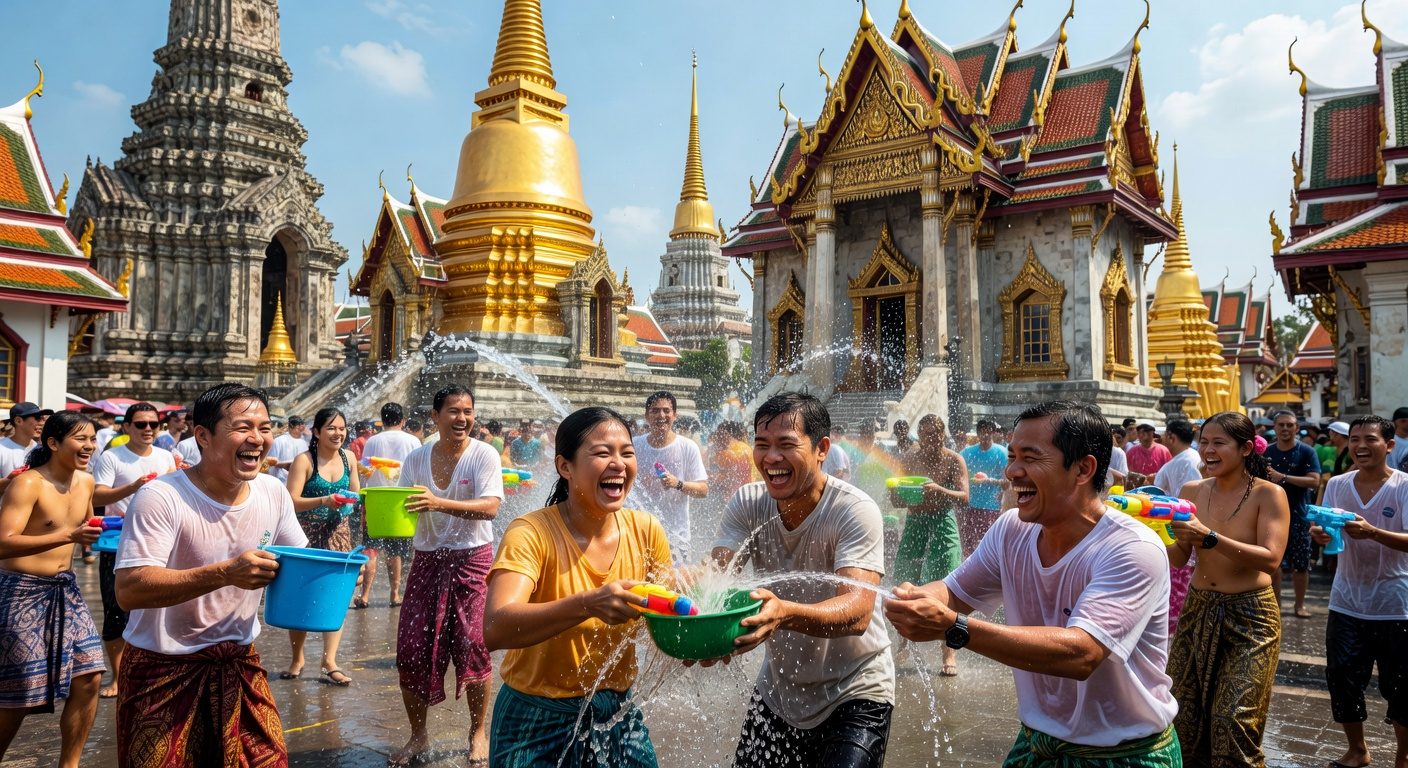
Every year as April arrives across Thailand, the air transforms — thick with the scent of jasmine garlands, the sound of traditional music drifting from temple courtyards, and, most unmistakably, the joyful chaos of water. Songkran, Thailand's ancient New Year celebration, is one of the world's most viscerally joyful festivals: a three-day national event where streets become rivers, strangers become family, and the act of soaking one another becomes a profound gesture of blessing and renewal. For the uninitiated traveller, it can seem like little more than an elaborate water fight. But Songkran is far richer than that — it is a time of spiritual cleansing, of honouring elders, of releasing the old year's burdens into the flowing water. To experience it like a local is to understand that every drop carries intention, every splash is a wish for good fortune, and every shared laugh in the street is a form of prayer. This guide will take you inside the festival's many layers — from its deep Buddhist roots to the practicalities of staying dry (or choosing not to).
The Spiritual Origins of Songkran
Long before the water cannons and Super Soakers, Songkran was a solemn and deeply sacred occasion. Its name derives from the Sanskrit word sankranti, meaning "astrological passage," referring to the sun's transition into Aries — a moment of cosmic reset in the Thai lunar calendar. The festival's roots stretch back over seven centuries, entwined with both Hindu astrological traditions and Theravada Buddhist practice, which has shaped Thai life at its most fundamental level.
In its traditional form, Songkran centred on the temple. Families would rise before dawn to offer food to monks, then return home to bathe revered Buddha images — a ritual act of purification in which perfumed water was poured over sacred statues and the runoff collected as blessed water. This sanctified water was then used to gently pour over the hands of grandparents and elderly relatives, a gesture of respect and a request for their blessing in the year ahead. The water did not drench — it was offered in a slow, intentional stream, a living metaphor for the washing away of misfortune and the welcoming of abundance.
Traditional Songkran Rituals Still Practised Today
- Tak Bat — offering alms to monks at dawn in temple courtyards
- Rod Nam Dam Hua — the elder-blessing water-pouring ceremony
- Bathing of Buddha images at local temples (Rot Nam Phra)
- Sand pagoda building in temple grounds (Kaeng Sai)
- Release of caged birds and fish as acts of merit-making
Over time, the controlled trickle gave way to the exuberant flood we know today. As urban populations swelled and tourism arrived, the water play expanded from courtyard to street. But scratch the surface in any Thai neighbourhood, and the older, quieter Songkran still breathes — in the morning light of a temple, in the tenderness of a grandchild pouring water over wrinkled hands, in the quiet moment before the music starts.
Where to Celebrate: Best Cities for Songkran
Thailand is large and geographically diverse, and Songkran wears a different face in each city. Choosing the right destination will dramatically shape the kind of experience you have.
| Feature | Chiang Mai | Bangkok |
|---|---|---|
| Atmosphere | Cultural, immersive, historic | Massive, electric, urban party |
| Best area | Old City moat — the iconic Songkran battleground | Silom Road & Khao San Road |
| Temple access | Excellent — Wat Phra Singh, Wat Chedi Luang | Good — Wat Pho, Wat Arun accessible |
| Crowd level | Very high (domestic + international) | Extreme in hotspot zones |
| Food scene | Northern Thai specialties; night markets | Everything; world-class street food |
| Best for | Culture seekers, first-timers, photographers | Party-goers, nightlife enthusiasts |
Beyond these two titans, consider Chiang Rai for a slower, more authentic experience with stunning temple art; Ayutthaya for Songkran amid ancient ruins; or the island of Ko Samui if you want to combine the festivities with a beach retreat. Each offers a genuinely different lens through which to watch Thailand greet its new year.
The Water Fight: Rules, Etiquette & What to Wear
The street water fight is Songkran's most famous face — and it is genuinely extraordinary. By mid-morning on April 13th, the first official day, streets across the country transform into rivers of exuberant humanity. Pickup trucks cruise slowly with barrels of water in their beds. Children with garden hoses claim strategic positions at intersections. Strangers pause traffic to pour ice-cold buckets over motorcyclists who grin rather than protest. If you're outside, you will get wet. This is not negotiable — and it is not unwelcome.
Essential Etiquette for Respectful Participation
- Never spray water at monks, the elderly, or anyone performing a religious ceremony
- Keep water away from food vendors and their products
- Do not use ice-cold water on very young children or the very old
- Avoid spraying water in people's faces — aim for the body
- Respect those who signal they don't wish to participate
- Never add chemicals, coloured dyes, or soap to your water
Clothing strategy is crucial. Leave your linen and silk firmly in the hotel. Opt for quick-dry synthetics — swim trunks, rash vests, athletic shorts. Invest in a quality waterproof phone pouch (RM50-80 equivalent at any Bangkok market) and leave your leather goods behind. Waterproof sandals or old sneakers beat flip-flops, which become treacherous on wet pavement. A small dry bag for your cash and key card is essential. Bring multiple changes of clothes — you will need them.
Beyond the Water: Traditional Ceremonies to Witness
For those willing to wake before the water cannons, Songkran's quieter rituals offer a profound counterpoint to the afternoon revelry. In Chiang Mai, the morning procession of revered Buddha images from Wat Phra Singh through the Old City is one of the festival's most moving spectacles — thousands of devotees line the streets, offering jasmine garlands and trickling fragrant water over the passing figures.
The sand pagoda tradition — in which families carry sand to temple grounds to replace what has been tracked out on devotees' feet throughout the year — is another ritual worth seeking out. Children shape elaborate castles topped with flags and flowers, making merit while playing, blurring the sacred and the joyful in the way that only Songkran can. In the evenings, Khantoke dinners in Chiang Mai offer northern Thai dance performances and traditional cuisine in a setting that speaks to the festival's deeper roots in court ceremony and communal feast.
"In Thailand, the new year does not arrive quietly. It arrives in a rush of water and laughter, blessing everything it touches — the sacred and the mundane, the monk and the tourist, the grandmother on the porch and the child running through the street."— Marcus Webb, Agri Motor Tech Hub
Planning Your Songkran Trip: Practical Guide
Songkran falls on April 13–15 annually, though celebrations in Chiang Mai extend for a full week, and some regions observe it for up to two weeks. Book accommodation a minimum of three months in advance — the festival draws enormous crowds and prices spike sharply. Flights into Chiang Mai airport become fully booked months out, so prioritise this above all other logistics.
Songkran 2026 — Key Planning Dates
- Official Songkran: April 13–15, 2026
- Chiang Mai Extended: April 13–20, 2026
- Book accommodation by: January 2026 at the latest
- Best flight window: Arrive April 11–12, depart April 16–17
- Budget per day: 1,500–3,000 THB (mid-range traveller)
- What to pack: Quick-dry clothes, waterproof pouch, reef-safe sunscreen
Transportation during Songkran requires patience. Songthaews (red pickup taxi-trucks) continue operating but become slow in the melee. Tuk-tuks are festive but wet. Renting a bicycle is excellent for navigating Chiang Mai's Old City in the morning hours before the water fighting begins in earnest. Avoid driving a motorbike unless experienced — wet roads and exuberant revellers create genuinely hazardous conditions.
Responsible Celebration: Being a Respectful Visitor
Songkran draws over four million tourists to Thailand each year, and the tension between celebration and cultural sensitivity is real and growing. The festival is not a theme park — it is a living, sacred tradition of the Thai people, and our role as visitors is to participate with genuine respect rather than mere consumption.
Learn a few words of Thai before you arrive — even a simple Sawasdee pi mai (Happy New Year) spoken with a smile will be received with extraordinary warmth. Dress modestly when visiting temple grounds, remove shoes before entering sacred spaces, and never place yourself higher than a Buddha image for a photograph. When participating in elder-blessing ceremonies, follow the lead of Thai participants rather than improvising.
Environmental responsibility matters enormously during Songkran. The festival generates significant water usage — participate thoughtfully rather than wastefully, and dispose of any plastic packaging you generate. Many regions of Thailand face water stress during the dry season, so the exuberant use of water that defines Songkran carries real environmental weight.
Ultimately, Songkran rewards the traveller who arrives curious, flexible, and genuinely open to something far beyond a holiday experience. Thailand's New Year is an invitation into a culture that has been perfecting the art of joyful reverence for seven centuries. Accept that invitation with both hands — and prepare to get completely, blissfully soaked.
Join the Conversation
Leave a Comment